Where agricultural knowledge becomes tangible.
A vineyard, a research amphitheatre, an aquaponics farm and a processing plant reveal different parts of the food system. WFA’s meeting history brings these settings into international exchange.

Cyprus: the farm, the product and the place.
The agricultural visits around the 2024 Limassol forum included vineyards and discussion of agricultural development and tourism. They connected cultivation with processing, local identity and the experience of visiting a rural enterprise.
For international exchange, this gives a useful starting point: understand how a crop becomes a product, and how that product connects a place with its customers.
Athens: crop science and cooperative enterprise.
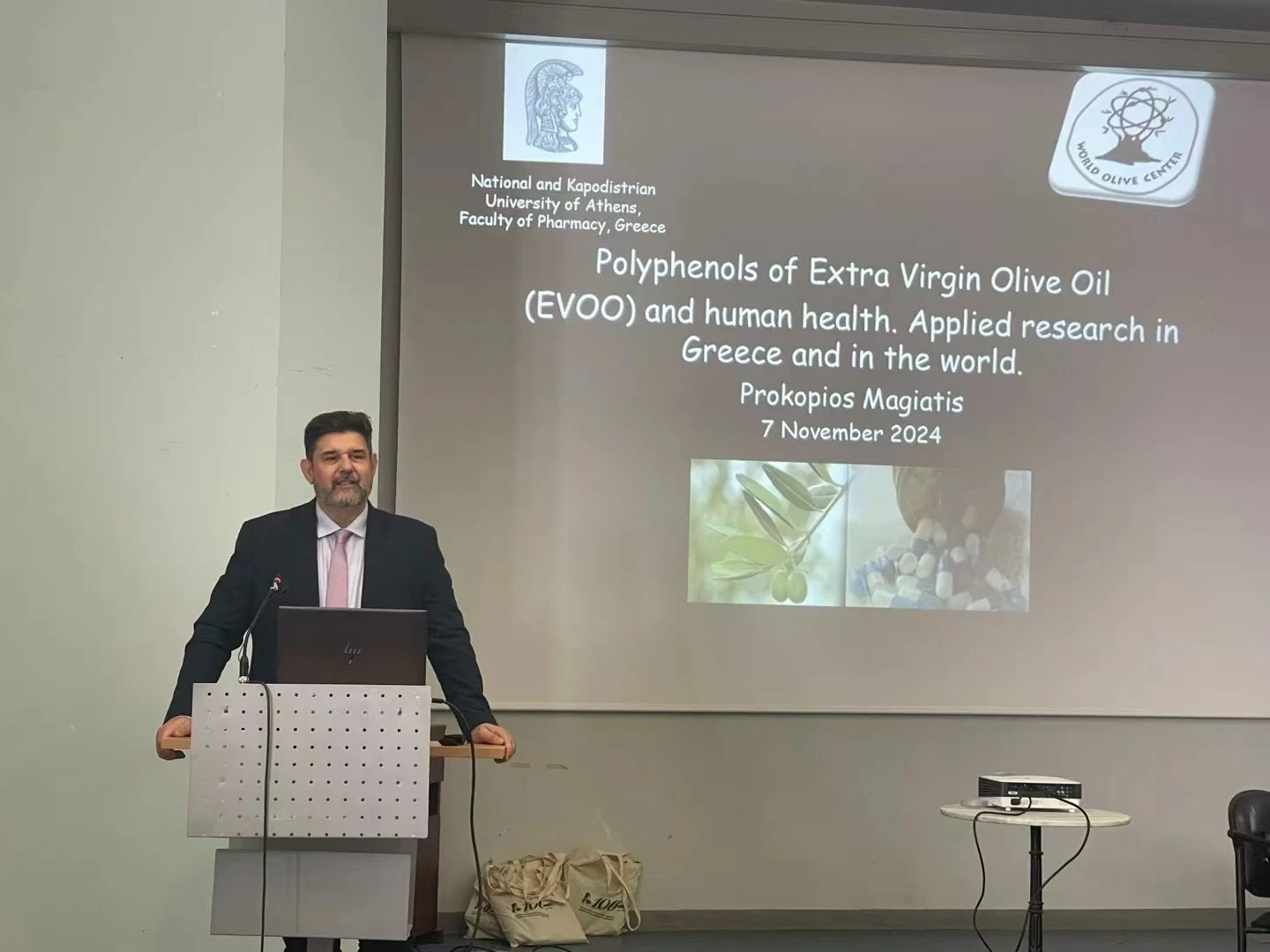
At the Agricultural University of Athens on 7 November 2024, presentations addressed crop systems, climate-related soil salinity and olive cultivation. Research on olive-oil polyphenols sat alongside discussion of herbs, small fruits and agricultural cooperatives.
The programme connected scientists and enterprises. The participant account from LIVA Groves includes agricultural supply chains, training and the organisation of production, showing how laboratory research and cultivation decisions can meet commercial questions.
Soil and cultivation
Crop systems and salinity connected environmental change with choices in the field.
Product knowledge
Olive cultivation and product research connected production with quality and differentiation.
Cooperatives and exchange
Discussions considered how growers organise and connect with markets.
Singapore: learning from a production system.
A participant’s account of the first GSSA describes a follow-up visit to Nippon Fish Farm in Kranji. The visit examined a transition from ornamental fish towards edible aquaponics, supported by changes in technology and infrastructure.
The setting made the relationship between investment, production methods and food supply visible.

Bengbu: a crop has more than one route to value.
During the April 2026 GSSA visit to BBCA, the company presented the conversion of renewable biomass into lactic acid and polylactic acid through fermentation. Discussion included agricultural processing, crop-residue use and applications for bio-based materials.
The visit widened the discussion beyond the harvest itself. Processing capability, by-products and industrial uses can influence the choices available to an agricultural region.